
The same 8mm reel, before and after.
This is real footage we remastered, not a demo reel from a software vendor. The left half is the raw scan, the right half is the same frames after upscaling, stabilization, noise removal and smoother motion.
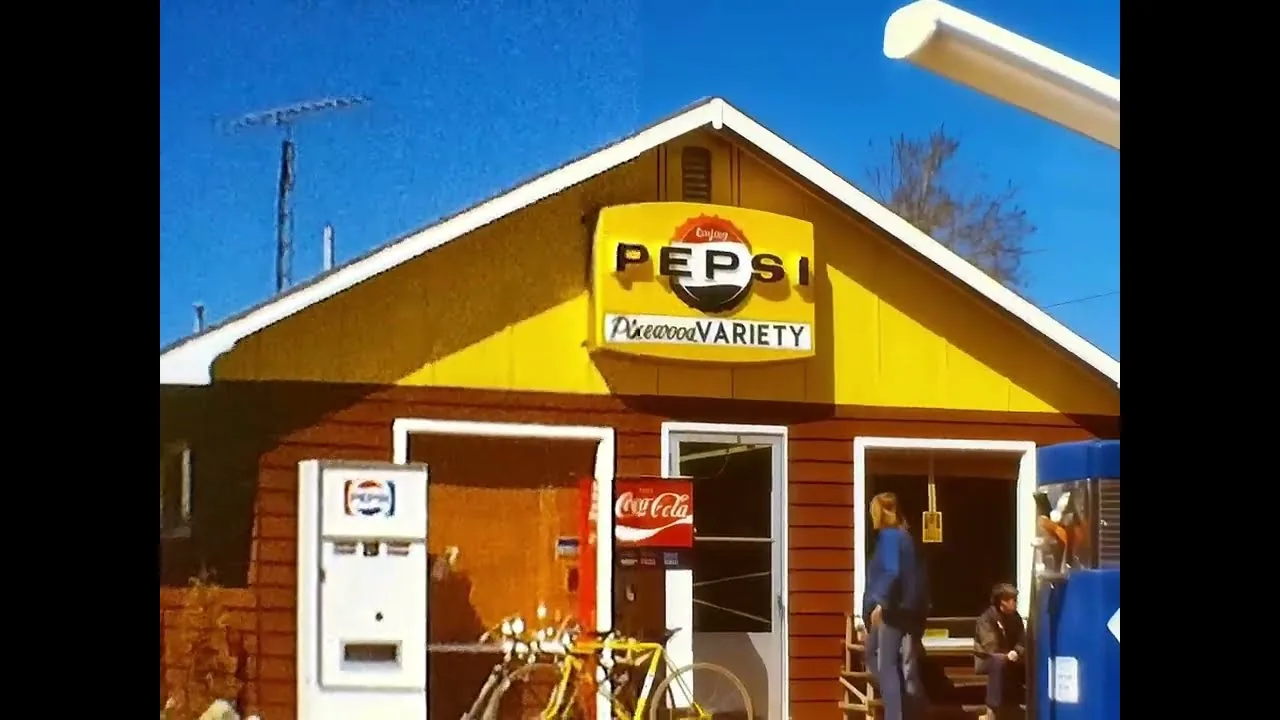
Plays here, or watch it on YouTube.
What we digitize
- Printed photos, slides, and negatives
- 8mm and Super 8 home movie film
- VHS, camcorder tapes, and older video formats
- Important documents and records
What makes our remastering different
Plenty of places will just scan your media and hand back a grainy digital copy. For us the scan is where the work starts, not where it ends. We can:
- Rebuild detail and enlarge: recover and rebuild detail that looks far sharper than the original.
- Smooth the motion: increase the frame rate (up to 60fps) so jerky old film plays smoothly.
- Clean it up: reduce grain, scratches, flicker, and dust, and improve faded or off colours.
- Restore damaged photos: repair scratches, tears, and fading.
The result: a digital copy you can keep, share with family, and back up, and in many cases, footage that looks better than you remember. Watch the example above to see the difference.
Common questions
Can you really make old 8mm film look like HD?
What can you increase the frame rate to?
How much does it cost?
Will I get my originals back?
Go straight to what you have
Each format is handled differently, so each has its own page with the detail and the honest limits.
PAPER AND RECORDS
Document and record digitization
Photographs and film are what people think of first, but a good share of this work is paper: client files, patient records, decades of accounts, drawings, certificates, the four-drawer cabinet nobody has opened since the last office move.
Two very different jobs hide under the same request, and it is worth knowing which one you are asking for. A scan gives you a picture of each page, fine for archival storage and for anything you only need to prove exists. Making those pages searchable, so a PDF can be found by name, date or invoice number rather than just stored, is a further step and a separate conversation. Say so when you bring the material in, because it changes the job.
For businesses the driver is usually one of three things: floor space, a retention rule that says records must survive a fire, or an insurance application asking where the records are held. If it is the third, the scan is only half the answer. The file has to live somewhere backed up afterwards, which is the part people forget. That is covered under managed IT, and it is worth settling before the scanning starts rather than after.
Bring it as it is. Staples, bindings, treasury tags and lever arches are normal and we deal with them. What we ask is that you don't spend an evening un-stapling everything first, because page order is far harder to reconstruct than a staple is to remove.
ON COST
Why nobody can quote this from a phone photo
We quote digitizing rather than publishing a rate, and that deserves an explanation rather than a shrug, because it is the first thing everybody asks.
Four things move the number, and they move it a long way. Format, a box of prints and a box of Super 8 reels are not remotely the same job. Volume, the per-item cost falls sharply once things are set up, so five hundred slides are nothing like a hundred times five slides. Condition. Clean, loose, sorted material runs quickly; mouldy, stuck-down or unspooled material does not. What you want at the end. A straight capture is one price, a remastered and restored version is another.
Which is why a real number needs eyes on the actual box. Bring it in, or send photographs of what is in it, and you get a fixed figure before anything starts. The consultation costs nothing and carries no obligation.
One genuinely useful thing to know: quantity works in your favour here. If you have been meaning to do this in stages, doing it in one go is normally the cheaper path, not the more expensive one.
WHERE TO START
Not everything is decaying at the same speed
If you have a mixed pile and a limited budget, the order matters more than the total. Some of it is on a clock and some of it will outlive all of us.
First: anything magnetic. Video and audio tape degrades whether or not it is played, and the machines that read it are no longer made. This is the category where the deadline is real.
Then: instant film and colour film. Instant prints delaminate. Colour dyes shift, which is why family pictures from the seventies have gone orange. Both are progressive and neither reverses.
Then: anything that smells. A reel of film with a sharp vinegary smell is actively decomposing, and it will affect the reels stored next to it. That box moves to the front of the queue regardless of what else is in the pile.
Last: black and white prints and negatives. Properly processed, these are the most stable thing in the house. They are worth doing, but they are not the emergency.
Go straight to the format you have: video tape, 8mm and Super 8 film, photos, slides and negatives, or damaged photographs needing restoration.
WHAT IT COSTS
The whole price list, on the page
Everyone else in this city publishes a rate card, so here is ours. The only thing we quote rather than list is restoration of physically damaged photographs, because that genuinely depends on the damage.
Video tape: VHS, VHS-C, Video8, Hi8, Digital8, MiniDV, Betamax
| Transferper tape, any length | $40 |
| Cleaned upstabilized, denoised, colour corrected | $95 |
| Professional formatsU-matic, Betacam, DVCAM, DVCPRO | $65 |
Film reels: Regular 8, Super 8, 16mm
| 3″ (50ft) | $35 |
| 4″ (100ft) | $60 |
| 5″ (200ft) | $95 |
| 7″ (400ft) | $145 |
| Cleaning, splicing and repair | included |
Remastering: price includes the transfer
| Up to 15 minutes | $395 |
| 15 to 30 minutesthe usual choice | $595 |
| 30 to 60 minutes | $895 |
| Each further hour | $650 |
Photos, slides and documents
| Prints up to 8×1069¢ over 200, 55¢ over 500 | $0.89 |
| Slides and negativeseach, at 4000dpi | $1.09 |
| Album and scrapbook pageseach | $2.50 |
| Documentsloose pages; $0.55 bound or stapled | $0.35 |
| Photo enhance and upscale$149 for ten, $325 for twenty-five | $19 |
| Photo restorationtears, water, missing sections | quoted |
| Minimum order | none |
Delivery
| Download link | free |
| USB drive | $20 |
Not sure which of these you have? Bring the box. Working out what is in it is part of the free consultation.
WHAT YOU ARE CHOOSING BETWEEN
Three tiers, and the difference is the work
The gap between $40 and $395 is not a grade of quality. It is a different amount of work, and the honest way to show that is a list of what actually happens to the picture.
| What happens | Transfer$40 | Cleaned$95 | Remasterfrom $395 |
|---|---|---|---|
| Captured at the best signal the tape or film can give | ✓ | ✓ | ✓ |
| Deinterlaced, with the aspect ratio corrected | ✓ | ✓ | ✓ |
| Noise and grain reduced | — | ✓ | ✓ |
| Picture stabilized | — | ✓ | ✓ |
| Colour and exposure corrected | — | ✓ | ✓ |
| Dust, specks and dropouts patched | — | ✓ | ✓ |
| Detail rebuilt and the image enlarged | — | — | ✓ |
| Motion rebuilt so it plays smoothly | — | — | ✓ |
| Graded scene by scene rather than in one pass | — | — | ✓ |
Why the price climbs so steeply. A transfer runs in real time. A two-hour tape takes about two hours. Cleaning it up takes a few hours more. A full remaster of that same tape can occupy a machine for the better part of a week, because rebuilding detail and rebuilding motion are done frame by frame across roughly two hundred thousand frames. That week is what the price pays for.
And why there is no 4K tier. You will see 4K sold as an upgrade elsewhere. We do not sell it, because resolution is not the thing that makes an old recording look better. Rebuilt detail is. A VHS tape holds somewhere around 333 by 480 lines of real picture. Everything past that is either reconstructed or invented, and a large file of a soft image is still a soft image. We output whatever the source can honestly carry and treat that as our judgement to make, not a price lever.
One word that means two things. On the film pages, cleaning is physical. The reel is cleaned and spliced before it is scanned, and that is included in the reel price. The “Cleaned” tier above is digital work done afterwards. Different job, same unfortunate word.
Why this is worth doing now
Magnetic tape degrades whether you play it or not. The binder holding the magnetic layer to the backing breaks down over decades, colour shifts, and eventually the tape sheds oxide every time it passes a head. Tapes from the eighties and nineties are well inside the window where that matters.
The other clock is hardware. Working VCRs in good condition are no longer manufactured, and the pool of functioning machines shrinks every year. The limiting factor on transferring a VHS tape before long won't be the tape: it'll be finding something to play it on.
Film ages more gracefully because it's a physical image rather than a magnetic signal, but it still suffers fading dye, dust, scratches and the shake of a hand-held camera. All four are fixable, which is why 8mm is the format where careful work produces the most startling before-and-after.
Colour prints from the sixties and seventies fade measurably, and it doesn't reverse. Self-adhesive “magnetic” albums, the sticky page with the plastic overlay, are actively damaging: the adhesive yellows, turns acidic, and eventually bonds to the photograph so firmly that removal tears it. If your photographs live in one of those, that's the batch to deal with first.
Not sure this is your problem? The free troubleshooter narrows it down in a couple of minutes, no account, no email address, and nothing to pay. It will tell you if the answer is something you can do yourself.
Tell us what it’s doing.
Quotes are free, and we’ll point you at the cheapest thing that actually solves it.